
Robbed of my heritage.
I have written about my genealogy before, but something very peculiar has now happened. The mystery surrounding my Italian grandfather has been a strong driving force behind why I started researching in the first place. Therefore, it was so overwhelming and frustrating that my DNA test showed I only had 2.8% Italian ancestry. That’s the alcohol content in a weak lager! How is that even possible if my grandfather was 100% hard liquor? Suddenly, all my summers in Italy, all my language studies in Italian, all my passion for Italian cuisine felt like a lie. The only consolation was that the test also revealed I was 5.6% Ashkenazi Jewish, which was excellent news considering how extremely overrepresented they are among Nobel laureates. And perhaps it meant that my grandfather was more Jewish than Italian in his genetic makeup, which would explain a lot.
I therefore carried my Jewish heritage high and proud. Tempelman—anyone can tell there’s a strong Jewish identity there. However, I never spoke about the fact that the absolute majority of my DNA confirmed I was Scandinavian. That brought me no pride whatsoever; rather, it instilled a feeling of troubling ordinariness. No one digs into their ancestry to confirm that they come from 20 generations of potato farmers in Småland, do they? So, the disappointment of being so insignificantly Italian was compensated by my newfound Jewish identity.
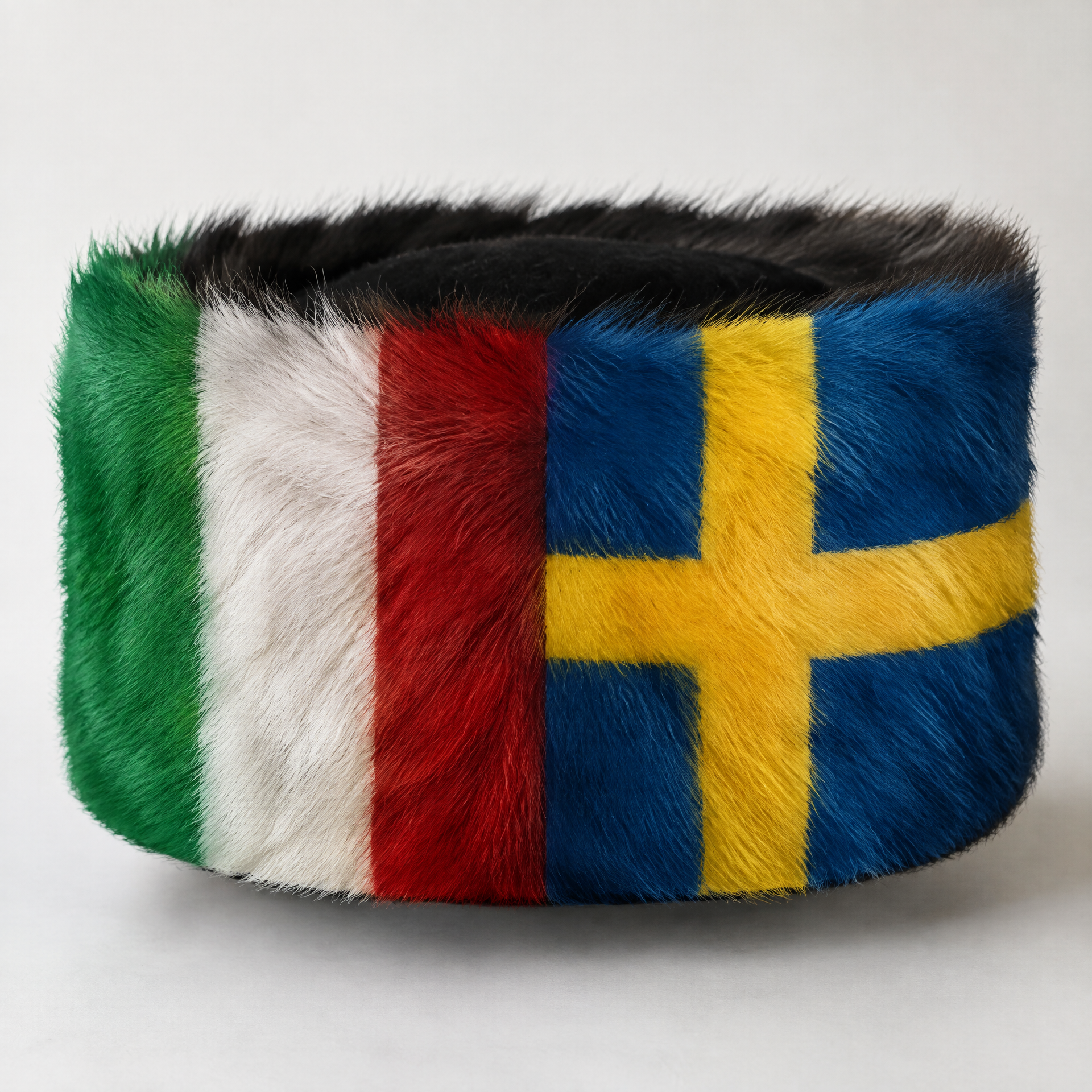
Religion has never interested me, but the fashion aspect is, to say the least, fascinating. I embraced the Orthodox style: black suit, oversized shirt, and a hat that looks like a beaver curled up to sleep. A fur cylinder that I wore with pride when the ceiling allowed it. Since I couldn’t be bothered to wait for my sideburns to grow half a metre long, I clipped on two fly strips that completed the transformation. A positive side effect was that we reduced the number of fruit flies at home. I also started throwing in a bit of Yiddish into my daily speech and affectionately referred to my wife as “shiksa,” which she thought meant “whore” and therefore didn’t go down too well.
Then one day, I received an email from the genealogy site informing me that they had updated their system to make it even more precise. They encouraged everyone to update their ethnicity estimate. One click and a few hours later, I was staring at the screen. At first, I was pleased that I had now been upgraded to 12.5% Italian, which felt like a more reasonable figure. But then came the enormous disappointment: I had 0% Jewish DNA left! It was like being robbed of my identity once again—albeit one I had only had for a short time—but nonetheless, one that I had liked and embraced. Not even the increase in my Italian heritage could lift my spirits again. The shifts had been too abrupt, and the only constant was that I remained nearly 80% Scandinavian.
Now, I can’t be bothered to update my self-image any further and wander disillusioned through the streets of Stockholm in my fur hat, a Dolce & Gabbana jacket in garish colours, and a pair of tracksuit bottoms in blue and yellow. I am a bastard and a witch’s brew, and I have to learn to live with that.
Nothing Ever Changes.

We landed at Fiumicino Airport in Rome and were set to pick up our hire car. I was fully prepared, as usual, to stand in a massive queue at an understaffed desk where the company's sole value proposition – inefficiency – was fulfilled to 100%.
The solitary woman behind the counter was either just naturally nonchalant or had been popping beta blockers like sweets. But my brain was switched on to holiday mode, so it felt almost like a warm reunion. Perhaps I was somewhat influenced by the fact that we had booked our first two nights in the shadow of Italy's second-highest mountain, Gran Sasso, in a converted 16th-century monastery. A secluded place where meditation and tranquillity are embedded in the walls.
In my monk-like state, I suddenly spotted a poster urging quick digital check-in. A given in Sweden, but here, a revelation on par with weeping Madonna statues. I swiftly entered all my details and took photos of both my passport and driving licence. It must be said, the speed at the desk was still slow. But I knew that the nonchalant woman would not only be handling bookings; she also had to upsell everyone on insurance, which is how the company makes its money. Eventually, it was my turn, and I gave her my booking number, cheerfully stating that I had pre-booked. She tapped away at the keyboard, staring into the computer screen while handing me a piece of paper and a pen.
-Name, address, telephone number. Her tone was lobotomised, like an early version of Siri.
-Doesn’t it say in my booking? And I’ve also checked in digitally here, I said with a small laugh, gesturing towards the sign with the QR code.
-Write here, she replied, pointing at the notepad without meeting my gaze.
At this point, I felt something was about to snap. Like the moment before a glacier calves an ice floe or as if I had just eaten from a street stall in Bangkok. But that didn’t align with my holiday persona, so I bit my tongue, wrote it down, and found my inner calm again.
-Passport and driving licence! she continued sternly.
That’s when it broke. I was no longer the pious and harmonious monk. Perhaps I was more like a monk who had indulged in choir boys for breakfast, lunch, and dinner, then sought forgiveness in confession afterwards.
-What’s the point of having to do everything again? I said loudly enough for all the other customers to fall silent. I threw my passport and driving licence onto the counter with a flourish. She met my dark gaze with a lifeless expression before eventually scanning my documents.
-Would you like comprehensive insurance that covers everything even if the car is completely wrecked? she mechanically inquired.
-Well, hopefully, I’d be dead by then, so perhaps we can skip that? I replied, clenching my fist so tightly that it crackled in the joints.
-I see you’ve already pre-booked with comprehensive insurance, she suddenly said, placing the car keys on the counter.
-So why do you ask me if you already KNOW?!
I was still seething as I drove up to the monastery. It dawned on me that the QR code and check-in were merely a way to kill time.
Italy remains unchanged. And unfortunately – so do I.
The Final Rest.
I happened to hear on the radio that 37 million kronor is being spent in a small Swedish town on rebuilding the crematorium ovens. That’s the kind of information that doesn’t pass unnoticed by my limbic system. Especially when a man explains that the “clients” have grown larger and that they must adapt accordingly.
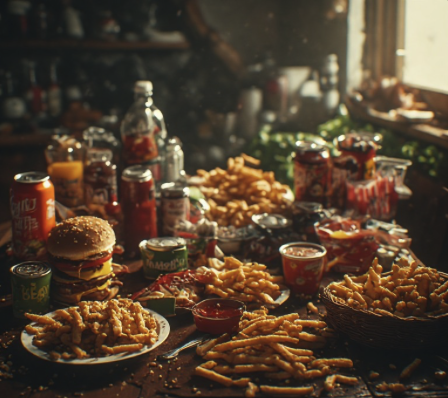
I find myself thinking that the population has evolved in step with the development of television sets. People have gone from the old 4:3 format to 16:9. The coffins have grown larger, and the ovens must be widened to accommodate a sedentary generation raised on junk food and fast carbohydrates.
I begin to wonder how they manage in other municipalities that still have the old 4:3 ovens. I can see several possible solutions. One is that steel funnel-like contraption you feed your Christmas tree into and get it elegantly wrapped in a plastic net. With a thicker plastic net, bodies ought to be compressible enough — like expensive salami — to slide more easily into the furnace.
If that proves insufficient, then surely some form of post-mortem fat reduction must be possible. It wouldn’t even require anaesthesia, and one could carelessly shave down the more troublesome areas until the body fits the opening. I imagine a larger version of one of those slicing machines they have in Italian delicatessens.
I may be venturing outside my area of expertise here, but surely it ought to cost substantially less than 37 million?
Another solution would be for the country to make a massive investment in public health: tax sugar heavily, encourage people to eat better, and get them exercising throughout their lives. But I realise that this is such an idiotic idea that I probably shouldn’t even mention it.
The Castrated Voice.
I sometimes narrate audiobooks. Usually, I have hard-boiled thrillers or serious non-fiction in my lap. Apparently, my deep voice is particularly well-suited for that. The fact that I am actually a sensitive soul longing to narrate books by Sally Rooney or Virginia Woolf seems to go unnoticed.
I was halfway through the narration of a book about the war in Afghanistan when my wife and I went on a planned training trip to Fuerteventura. The remaining narration was scheduled to be completed after my return.
It started off well. The sun was shining, we exercised several times a day, read books by the pool, and enjoyed a lavish buffet at set times. One day, we decided to try a completely new sport that looked exciting. Bungy-fitness involves hanging in a harness attached to a bungee cord from the ceiling while performing various demanding exercises. An overly enthusiastic female instructor from Germany welcomed us all. Particularly me, as I was the only man in the class. A fact that should have raised my suspicions, but I interpreted it as a compliment. Most men my age seem to age poorly and become as stiff in mind as in body. I consider myself to be in good physical shape and still wonderfully curious and open. It would soon become clear that my open-mindedness would backfire.
I didn’t sing along with the music like the others as my body was flung around like a piece of meat on a hook; I screamed for my life. My testicles, which once painstakingly descended and found their natural home, were now being pushed higher into my body with each jump. In my mind, they looked like two frightened dogs hiding under the bed during New Year’s fireworks.
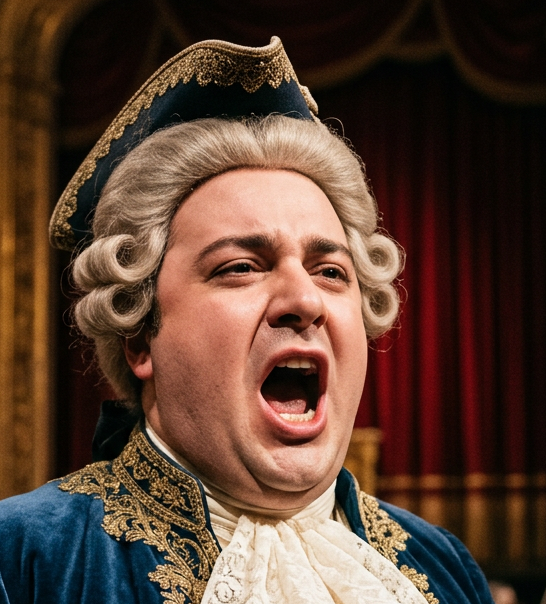
Forty-five minutes later, we left the class. I thought that this could be an effective treatment method for sexual deviants, but I didn’t have the energy to discuss it. My wife walked as if she had just given birth to twins, so at least the experience had been somewhat gender-neutral. When we returned to Sweden after the trip, I went back into the studio to record the final chapters of the book’s climax. A group of Navy Seals were trying to rescue a soldier who had been left behind after an ambush and was injured. What was supposed to be a nail-biting finale turned into an involuntary, comedic triumph. America’s toughest soldiers, whom I had portrayed so sternly with an authoritative voice, suddenly sounded as if they were part of the Bee Gees. Naturally, the publisher contacted me immediately and was furious. They said that this could not be published as an audiobook and that I wouldn’t be paid. I replied that this was an artistic interpretation on my part, where America’s ridiculous actions in the world right now deserved exactly the voice they received: a whiny, prepubertal, fat boy that no one can take seriously.
The Host Animal.

I have a tear in one of my eyes, which glows an angry red. It has been going on for a couple of weeks, so I’m heading to a doctor just to be safe. After a thorough examination, she confirms that it’s a superficial rupture that will heal on its own.
-But, she adds, I can see that you have an infection in both eyes.
-Do I?
-Yes, you are red and irritated at the corners of your eyes, and that’s because you have mites in your eyelashes.
-Mites? What are they doing there?
-They’re everywhere, but it’s not the mites themselves that you’re reacting to.
-So what is it then?
I leave the clinic with my self-esteem at an absolute low. Even though I tried to maintain a neutral expression in front of the doctor, I suspect that the disgust and my horror shone through.
-I think I’ll settle in his armpit; it’s always warm and cosy there, said one mite to another.
-I think I’ll choose the scalp, because from there I can see the world, said another mite.
-Okay. I’ll take the eyelashes, said the third mite after a moment's thought.
-What are you going there for? asked the second mite.
-There, I can poop in his eyes.
I didn’t think my self-esteem could sink any lower, but it turned out there were several floors left to descend. I even thought the doctor gave me a disgusted look after her diagnosis, but that might have been more in my head.
For several weeks, I manically cleaned my eyes with wet wipes soaked in tea tree oil, on the doctor’s advice. My wife wondered what I was up to, and I replied that it was a new skincare treatment for aging.
-I didn’t think you believed in that sort of thing? she said, pleasantly surprised.
How could I tell her that the brown eyes she once fell so in love with were now a toilet for vermin? I mean, how much can a marriage really take? It would have been significantly easier to say that I hate puppies and have just contracted syphilis.
-But darling, why have you kept this to yourself? she would have said, chuckling softly.
Four weeks later, the treatment is over, and my eyes have a milky quality and the scent of tea tree oil. But thankfully, I no longer have any itching in my eyes.
I wonder where all the mites have moved to? I think to myself as I absentmindedly scratch between my legs.
The Legacy.
I have been invited to the Department of Culture, which is holding a breakfast hearing. The Culture Minister, who has no interest in anything other than her own career, opens with an address.
— Welcome. Today I thought we might discuss how we can move the cultural sector away from grant dependency towards generating revenue.
We are a handful of parasites and a few arts journalists who have dragged ourselves here to be humiliated and receive a free sandwich and a cup of coffee. The Culture Secretary's bracelets rattle as she blithely continues her monologue.
— Culture that isn't commercial and doesn't cover its own costs simply isn't good enough. It's a hobby.
— May I ask something? I say, involuntarily raising my hand like a schoolboy.
— Of course, Anders. That is why we're here, she replies through gritted teeth.
— How do you feel about the fact that you yourself are a cost, and that you moreover run a department which, by your own argument, contributes nothing to the public purse?
The other parasites glance at me approvingly. The Culture Secretary tilts her head slightly and smiles down at me.
— At least I don't sit about playing with clay all day and expect other people to pay for it. I'm an elected official and I contribute to the proper functioning of society.
She is just about to carry on when I raise my hand again. She sighs and nods at me.
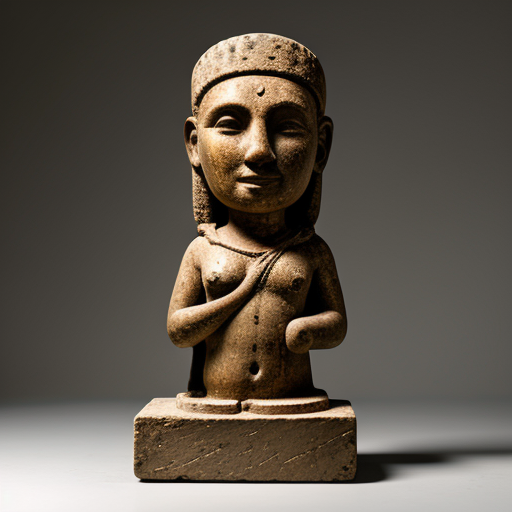
— Funny you should mention clay. In every excavation, the anthropologists are obsessively interested in pottery. It's often what reveals how advanced or primitive a people were at the time. The shards of a wine vessel don't merely tell us they could produce a sophisticated drink. They tell us a great deal about their technical skill — the ability to create something to transport and store wine in that remains functional thousands of years later. And we marvel that they also adorned their vessels with images, symbols, figures or stories that mattered deeply to them.
— Where are you going with all this? says the Culture Secretary, glancing wearily at her designer watch.
— What is humanity's legacy if we strip away culture? Does it even exist — if no one finds a vessel, a beautiful ruin, stories, images, tapestries, music, clothing and jewellery? I say, gesturing towards the Culture Secretary's bracelet.
— I'm only against the pointless and unprofitable forms of cultural expression, says the Culture Secretary, keen to wrap up the meeting.
— Van Gogh and Emily Dickinson didn't earn a penny from their art in their lifetimes, and today we rank them as giants.
— So you think we should throw money at the cultural sector and hope that great and immortal art will emerge?
— Precisely. And that is what will become your legacy. No one remembers a tight-fisted, carping Culture Secretary — but everyone remembers a visionary who ushered in a golden age.
The other parasites and I leave the Department for Culture with the hobbyist's familiar sense that the grants probably won't be going up this year either.
Run for your life.
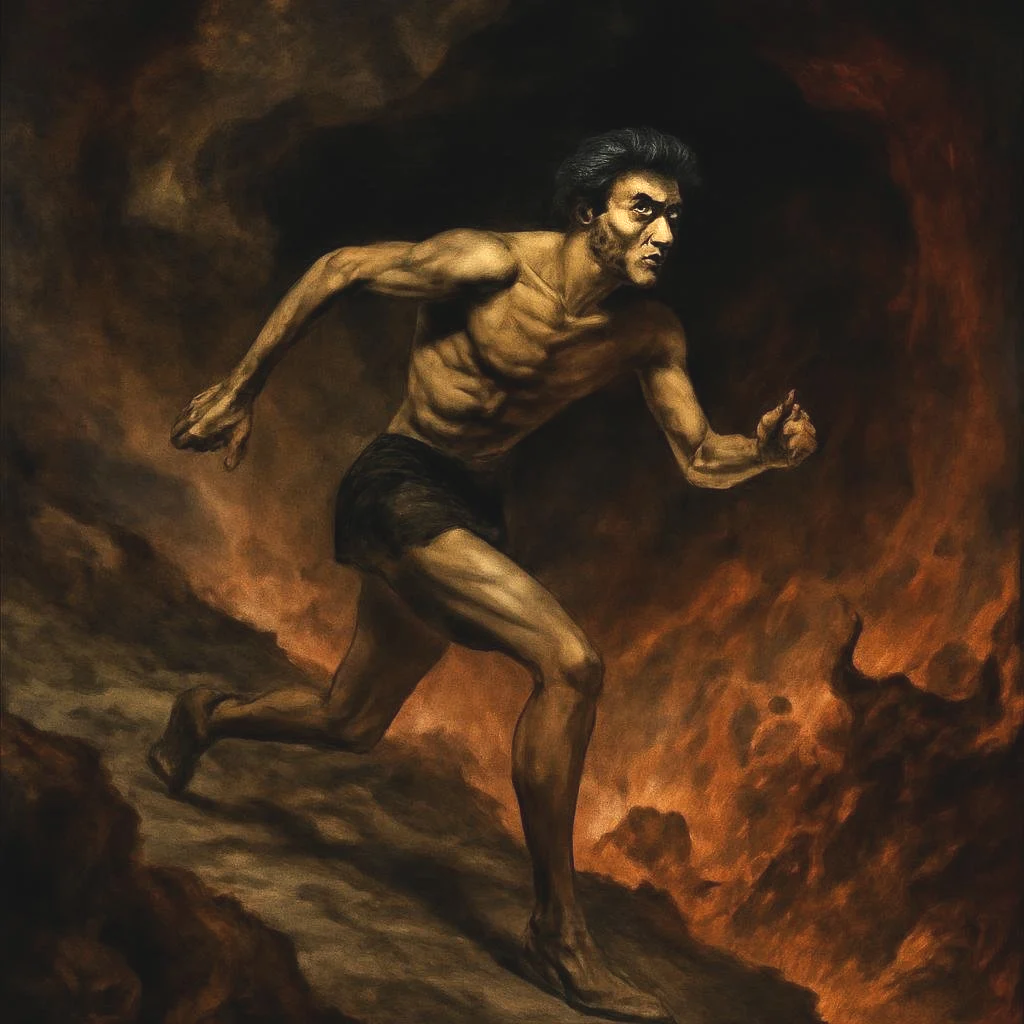
I’m going to be a pacemaker in a 5,000-metre race at the Diamond League. The plan is for me to set the pace that will help the guys break a new world record. I’m neither fit enough nor technically skilled for the job, but it’s been a childhood dream of mine to take part in a major athletic competition. The Diamond League management turned out to have a relationship with bribes that’s as unproblematic as FIFA’s. When I promised them a little social media stardust in return, they gave me the green light.
Weltklasse in Zurich is the magnificent stadium where I walk in, side by side with the world’s elite, greeted by the cheers of 25,000 spectators. The runners have been warming up on a side arena, where they’ve stretched, had massages, and practised mental exercises. I, on the other hand, have been warming up in a car with the seat heater on full blast, eating an extra-large meal of ultra-processed junk food. Inside the stadium, I wander around with chips and mayonnaise, trying to make small talk with the runners. It doesn’t go well – they’re as nervous as racehorses and completely focused on the event. They stretch, bounce lightly on their feet, or stare blankly into the distance. A steward asks us to line up at the starting line. I throw my food onto the grass and take my place on the line with the others. The scent of adrenaline is tangible in the air as the murmur of the crowd quietens. The starting gun is raised just as I calmly take out my phone.
Suddenly, the gun fires, and the race begins. The crowd roars, and the runners take off at full speed. I remain standing and watch the race on the big screen. The small TV camera on rails running along the track follows the runners closely. What no one knows is that the night before, I installed a small but powerful speaker on the camera, audible only to the runners. I now activate it from my phone. A distorted collage of sounds blares out: a rabid pack of growling wolves, which then transitions into Trump’s imbecilic ramblings mixed with the sound of screaming pigs on their way to slaughter. The effect on the runners is immediate – they pick up the pace. Then comes a hellish screeching noise of a train braking and the rattle of machine-gun fire. Hitler’s yelling voice is heard screaming “Ausländer raus!” The runners glance nervously behind them and shift into an even higher gear. Then Trump’s voice returns, panting exaggeratedly, giving the impression he’s getting closer and closer. “Grab ’em by the pussy, grab ’em by the pussy, grab ’em by the pussy!!” The runners sprint desperately at full throttle as the soundscape shifts to detonating landmines, whistling rubber bullets, and the snapping jaws of wolves.
Afterwards, I have a meeting with the head of the Diamond League. He’s conflicted about my performance as a pacemaker.
-How can you be, after a new world record? I ask, confused.
-It’s not the result I dislike; it’s the method. The food sponsors also thought it was distasteful that everyone vomited after the finish.
-You got the highest minimum performance in a race ever – every runner outdid themselves. What more could you want?
-I just think there must be other ways.
-This is modern, I reply irritably. In the past, you could motivate people with positive things. A dream, a vision, or a role model. Today, that path is completely closed. There’s nothing positive left that motivates people anymore. All that remains is fear and the flight impulse. I made them run for their lives, as if there were no tomorrow. Which is both effective and true.
-So what you’re saying is I no longer need to offer a million pounds in prize money? he says, suddenly looking far less sceptical.
-What about the other events? he continues, intrigued.
-I haven’t thought it all through yet, but I believe, for instance, you could link the high jump bar to a bomb that detonates at home with their loved ones if they knock it down.
-This feels really good, he says. I look forward to a long partnership with you.
-Likewise, I reply, noting that he has an erection.